 Technical & Quality
Understanding GSM, BF & ECT in Corrugated Packaging
When purchasing corrugated boxes, you may often hear terms such as 18 BF, 20 BF, 24 BF, 28 BF, or 35 BF. Many buyers assume that a higher BF…
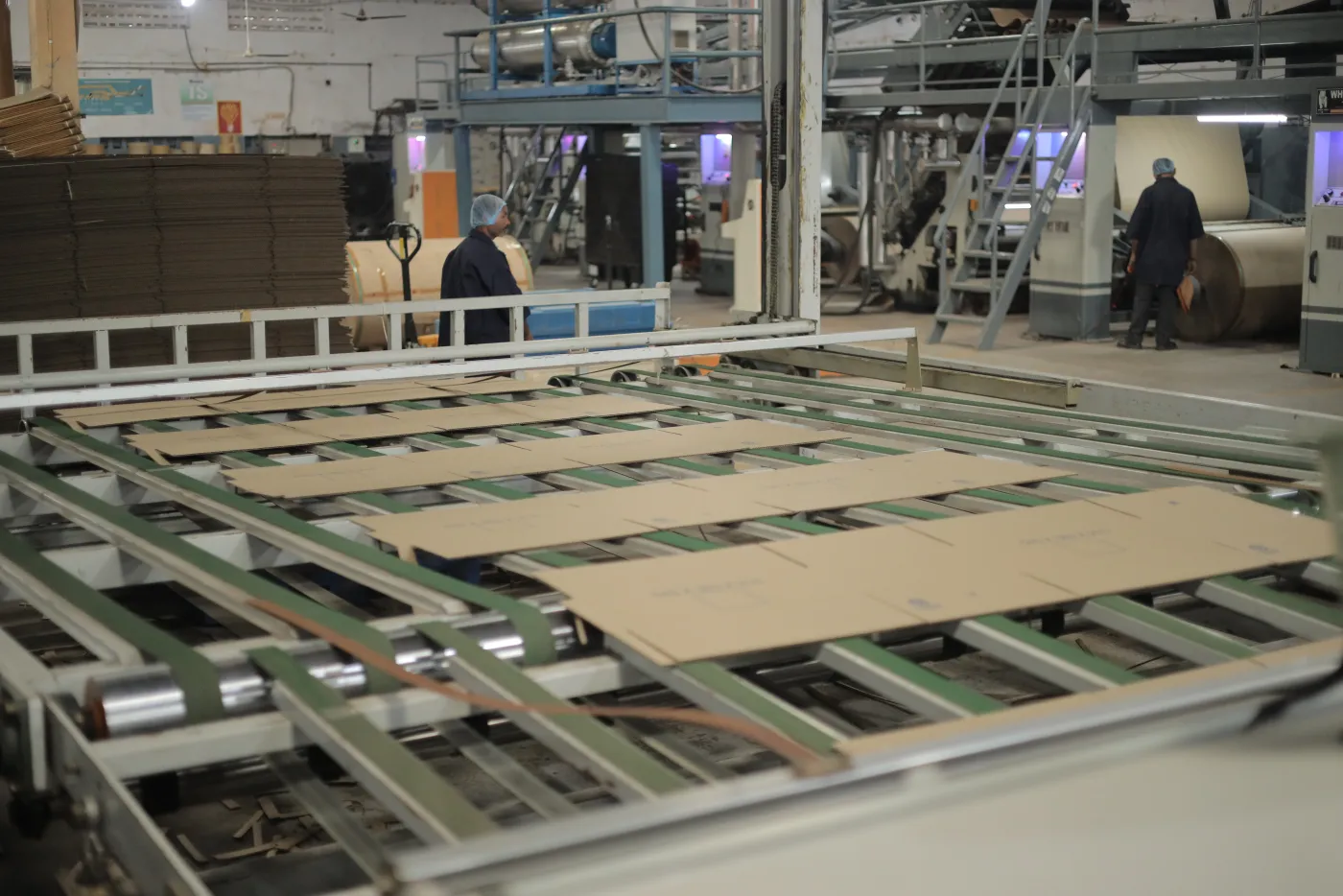
A corrugated box may appear simple, but behind every high-quality box is a series of laboratory tests that ensure it can safely protect products during storage, handling, and transportation.
Whether you’re shipping pharmaceuticals, FMCG products, engineering components, electronics, or export goods, consistent packaging quality is essential. Even a small variation in paper quality or manufacturing can result in box failure, damaged products, customer complaints, and financial losses.
At Asian Packaging Industries, every batch of corrugated packaging undergoes strict quality control procedures. From raw material inspection to finished box testing, we ensure every package meets customer specifications and industry standards.
In this guide, we’ll explore the most important quality tests performed on corrugated boxes and explain why they matter.
Corrugated boxes experience a variety of conditions throughout the supply chain, including:
Without proper testing, packaging may fail before reaching the customer.
Quality testing helps:
The GSM Test measures the weight of the paper used to manufacture corrugated boards.
To verify whether the paper matches the specified grammage.
Higher GSM generally means heavier paper, but it should always be evaluated together with Burst Factor and other quality parameters.
Burst Factor measures the paper’s ability to resist bursting pressure.
To evaluate paper strength.
Common BF grades include:
ECT measures the strength of the corrugated board when pressure is applied to its edge.
To evaluate stacking performance.
ECT has become one of the most important quality indicators for modern packaging.
The Box Compression Test evaluates the maximum load a complete corrugated box can withstand before collapsing.
To determine stacking strength.
This test evaluates the actual performance of the finished box.
The Cobb Test measures the amount of water absorbed by the paper surface over a specified period.
To determine water absorption.
Low Cobb values generally indicate better resistance to moisture.
Paper naturally contains moisture.
Too much or too little moisture affects packaging performance.
To measure paper moisture percentage.
Proper moisture control is critical for consistent packaging quality.
This test measures the bonding strength between the fluted medium and the linerboard.
To verify adhesive bonding.
Weak bonding can cause board separation during transportation.
The Flat Crush Test measures the ability of corrugated flutes to resist crushing.
To evaluate flute strength.
This test is particularly important for lightweight packaging.
The Ring Crush Test measures the compression strength of the paper itself.
To evaluate paper quality.
RCT is commonly used in paper mills and quality laboratories.
The Ply Bond Test measures the bonding strength between different paper layers.
To evaluate board integrity.
The finished corrugated box is checked for:
Correct dimensions ensure:
Printed boxes undergo visual inspection.
The following are checked:
High-quality printing strengthens brand identity and ensures regulatory information is legible.
Boxes are inspected for:
Weak joints can cause packaging failure even if the board itself is strong.
| Test | Purpose | Why It Matters |
|---|---|---|
| GSM Test | Measures paper weight | Consistent board construction |
| Burst Factor (BF) | Measures paper strength | Better durability |
| Edge Crush Test (ECT) | Measures board strength | Improved stacking |
| Box Compression Test (BCT) | Measures box strength | Prevents collapse |
| Cobb Test | Water absorption | Moisture resistance |
| Moisture Test | Paper moisture | Stable packaging |
| Pin Adhesion Test | Flute bonding | Strong board construction |
| Flat Crush Test (FCT) | Flute strength | Better cushioning |
| Ring Crush Test (RCT) | Paper compression | Stronger paper |
| Ply Bond Test | Layer bonding | Better durability |
| Dimension Inspection | Box accuracy | Proper fit |
| Print Inspection | Printing quality | Brand appearance |
| Stitching Test | Joint strength | Reliable packaging |
Routine quality testing offers significant advantages:
Quality control is not just about passing tests—it is about delivering dependable packaging every time.
Our quality engineers recommend:
✔ Test every incoming paper batch.
✔ Monitor moisture throughout production.
✔ Perform BCT and ECT tests regularly.
✔ Inspect printing before dispatch.
✔ Verify box dimensions during production.
✔ Never compromise on adhesive quality.
Consistent testing results in consistent packaging performance.
At Asian Packaging Industries, quality is built into every stage of the manufacturing process.
Our quality assurance capabilities include:
Our commitment to quality ensures that every corrugated box leaving our facility meets the highest standards of strength, durability, and performance.
There isn’t a single most important test. The combination of GSM, BF, ECT, BCT, and Cobb Test provides a comprehensive assessment of packaging quality.
ECT measures the edgewise strength of corrugated board, making it one of the best indicators of stacking performance.
The Cobb Test measures how much water the paper absorbs, helping evaluate moisture resistance.
Manufacturers typically test representative samples from production batches and also inspect raw materials to ensure consistent quality.
By identifying issues early, quality testing reduces product damage, minimizes material waste, lowers customer complaints, and improves production efficiency.
Quality testing is the foundation of reliable corrugated packaging. From measuring paper weight with GSM to evaluating stacking performance through ECT and BCT, each test plays a specific role in ensuring that corrugated boxes perform as expected in real-world conditions.
At Asian Packaging Industries, we believe that superior packaging begins with superior quality control. By combining advanced manufacturing technology, a dedicated quality laboratory, and rigorous inspection procedures, we deliver corrugated packaging solutions that provide consistent protection, dependable performance, and long-term value for our customers across diverse industries.
Need this specified for your own product?
Technical & QualityWhen purchasing corrugated boxes, you may often hear terms such as 18 BF, 20 BF, 24 BF, 28 BF, or 35 BF. Many buyers assume that a higher BF…
5 min read Technical & Quality
When purchasing corrugated boxes, you've probably come across specifications like 120 GSM, 150 GSM, 180 GSM, or 250 GSM. Many people assume that a…
5 min read Technical & Quality
When buying corrugated boxes, one of the most common questions customers ask is:
6 min read