 Technical & Quality
Understanding GSM, BF & ECT in Corrugated Packaging
When purchasing corrugated boxes, you may often hear terms such as 18 BF, 20 BF, 24 BF, 28 BF, or 35 BF. Many buyers assume that a higher BF…
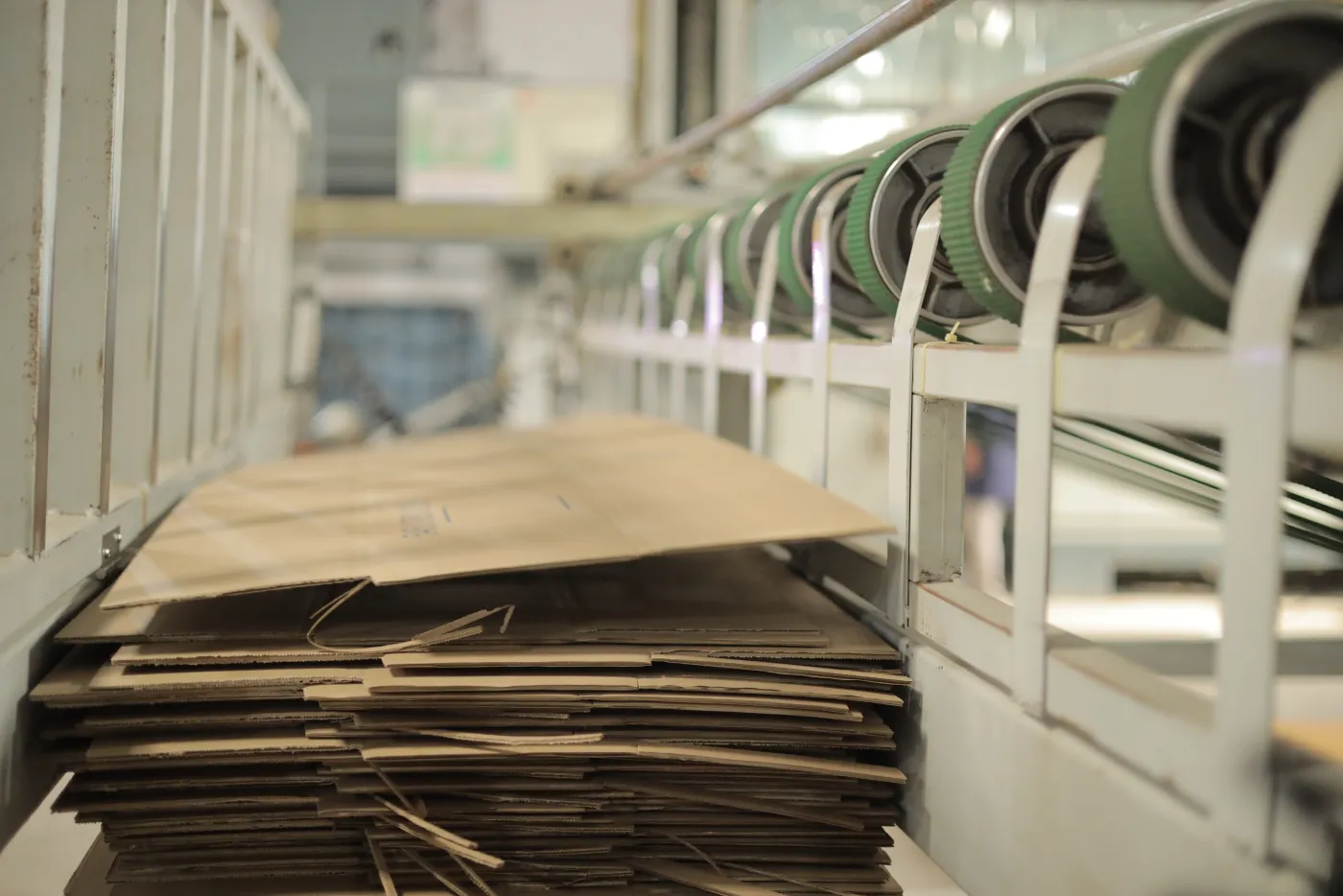
Paper-based packaging is widely used because it is lightweight, recyclable, and cost-effective. However, one of its biggest challenges is moisture absorption. When paper absorbs excessive water, it loses strength, affecting the performance of corrugated boxes during storage, transportation, and handling.
To evaluate how much water a paper surface absorbs, manufacturers perform the Cobb Test. It is one of the most important quality tests in the corrugated packaging industry, especially for products that may be exposed to humidity, rain, or damp storage conditions.
At Asian Packaging Industries, we perform the Cobb Test as part of our quality assurance process to ensure that every corrugated box delivers reliable performance under real-world conditions.
The Cobb Test measures the amount of water absorbed by a paper or paperboard surface over a fixed period of time.
The result is expressed as:
Simply put:
This makes the Cobb Test an essential indicator of moisture resistance in corrugated packaging.
Corrugated boxes are frequently exposed to moisture during:
When paper absorbs too much moisture, it becomes weaker and less capable of protecting products.
The Cobb Test helps manufacturers:
The Cobb value indicates the amount of water absorbed by one square metre of paper within a specified time.
If a paper absorbs 30 grams of water per square metre in 60 seconds:
Lower values indicate better moisture resistance.
Higher values indicate greater water absorption.
The test is conducted using a Cobb Tester following standard testing procedures.
A paper or corrugated board sample is cut to the required size.
The sample is clamped inside the Cobb testing apparatus.
A measured quantity of water is poured onto the paper surface.
The water remains on the surface for a specified duration.
Common testing times include:
The selected time depends on the applicable testing standard.
After the specified time, excess water is removed carefully.
The paper is weighed again.
The increase in weight represents the amount of water absorbed.
The result is expressed in g/m².
Different packaging applications require different moisture resistance.
| Cobb Value (g/m²) | Performance |
|---|---|
| Below 25 | Excellent moisture resistance |
| 25–40 | Good moisture resistance |
| 40–60 | Average performance |
| Above 60 | High water absorption |
Actual acceptable values depend on customer requirements and packaging applications.
Several factors influence water absorption.
Virgin kraft paper generally provides better moisture resistance than lower-grade recycled paper.
Special coatings reduce water absorption.
Examples include:
Well-bonded fibres absorb less water.
Proper paper manufacturing improves surface density and reduces water penetration.
High humidity can affect paper performance over time.
Proper storage helps maintain consistent quality.
Lower Cobb values provide several advantages.
Dry paper maintains higher compression strength.
Export shipments often experience humidity and condensation.
Moisture-resistant paper reduces packaging failures.
Lower water absorption prevents:
Boxes maintain their strength even during extended warehouse storage.
Moisture-resistant packaging better protects products throughout the supply chain.
Medicine cartons require stable packaging throughout storage and transportation.
Packaging must maintain hygiene and structural integrity.
Moisture can damage both packaging and products.
Sea transportation often exposes packaging to high humidity.
Moisture-resistant cartons help prevent damage to finished goods.
Certain chemical products require packaging that remains stable in humid environments.
These two tests are often confused.
| Cobb Test | Moisture Content Test |
|---|---|
| Measures water absorption | Measures existing moisture inside paper |
| Indicates moisture resistance | Indicates moisture percentage |
| Uses water exposure | Uses moisture analysis |
| Evaluates surface performance | Evaluates paper condition |
Both tests are important for maintaining packaging quality.
| Cobb Test | Burst Factor |
|---|---|
| Measures water absorption | Measures paper strength |
| Evaluates moisture resistance | Evaluates bursting resistance |
| Important for humid environments | Important for paper durability |
Each test measures a different aspect of paper quality.
Paper with excessive water absorption may experience:
Routine testing helps identify these issues before production.
Manufacturers improve moisture resistance by:
✔ Using premium kraft paper.
✔ Applying water-resistant coatings.
✔ Improving paper manufacturing processes.
✔ Maintaining proper storage conditions.
✔ Controlling humidity during production.
✔ Performing regular Cobb Tests.
These practices improve overall packaging reliability.
Our quality engineers recommend:
This approach ensures consistent packaging performance across different environments.
At Asian Packaging Industries, every corrugated box is manufactured using carefully selected raw materials and tested to ensure excellent moisture resistance and long-term durability.
Our capabilities include:
By combining premium materials with rigorous quality control, we deliver corrugated packaging that performs consistently in both domestic and export markets.
The Cobb Test measures the amount of water absorbed by paper or paperboard over a specified period. The result is expressed in grams per square metre (g/m²).
It helps evaluate the moisture resistance of paper, ensuring that corrugated packaging maintains its strength in humid or wet conditions.
Yes. Lower Cobb values indicate that the paper absorbs less water and generally offers better moisture resistance.
Pharmaceuticals, food & beverages, electronics, export packaging, textiles, and chemical industries often require paper with good moisture resistance.
No. The Cobb Test should be considered along with GSM, Burst Factor (BF), Edge Crush Test (ECT), Box Compression Test (BCT), and moisture content to evaluate overall packaging performance.
The Cobb Test is a critical quality assessment for paper and corrugated packaging because it measures how much water the material absorbs under controlled conditions. A lower Cobb value helps maintain box strength, improve print quality, enhance export performance, and reduce the risk of packaging failure caused by moisture.
At Asian Packaging Industries, moisture resistance is an essential part of our quality assurance process. Through advanced manufacturing technology, premium raw materials, and comprehensive laboratory testing, we produce corrugated packaging solutions that provide dependable protection across a wide range of environmental conditions. Whether you’re shipping products locally or internationally, our customized packaging is engineered to deliver consistent performance and lasting reliability.
Need this specified for your own product?
Technical & QualityWhen purchasing corrugated boxes, you may often hear terms such as 18 BF, 20 BF, 24 BF, 28 BF, or 35 BF. Many buyers assume that a higher BF…
5 min read Technical & Quality
When purchasing corrugated boxes, you've probably come across specifications like 120 GSM, 150 GSM, 180 GSM, or 250 GSM. Many people assume that a…
5 min read Technical & Quality
When buying corrugated boxes, one of the most common questions customers ask is:
6 min read