 Technical & Quality
Understanding GSM, BF & ECT in Corrugated Packaging
When purchasing corrugated boxes, you may often hear terms such as 18 BF, 20 BF, 24 BF, 28 BF, or 35 BF. Many buyers assume that a higher BF…
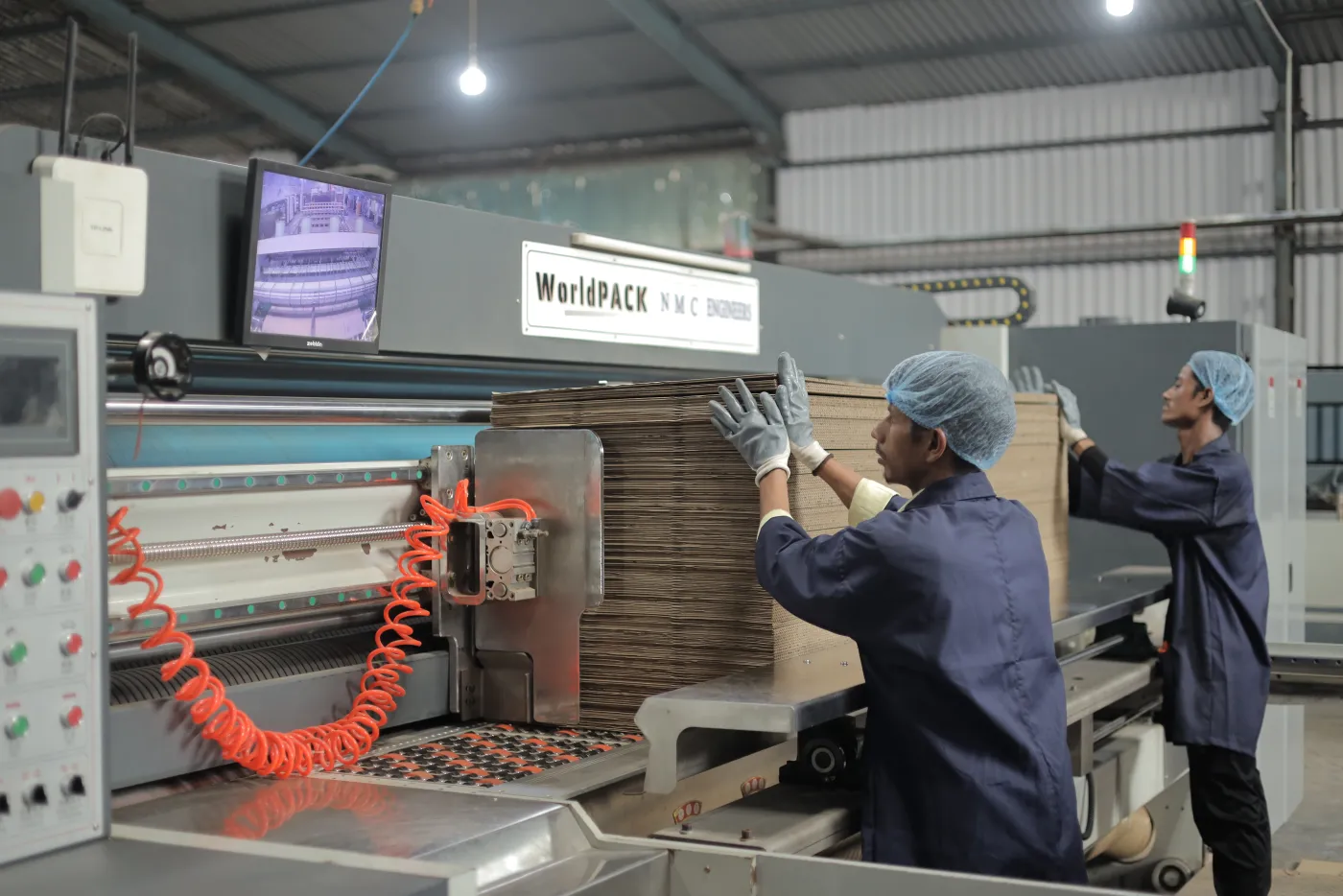
Imagine a warehouse where hundreds of corrugated boxes are stacked on top of each other. The boxes at the bottom must support the weight of every box above them. If they fail, products can be crushed, damaged, or even become unsellable.
This is where the Box Compression Test (BCT) becomes essential.
The Box Compression Test (BCT) measures the maximum vertical load a completed corrugated box can withstand before it collapses. It is one of the most important quality tests for determining whether a box is suitable for stacking, transportation, and long-term storage.
At Asian Packaging Industries, BCT plays a vital role in developing packaging solutions for industries such as FMCG, pharmaceuticals, engineering, automotive, electronics, chemicals, textiles, and export packaging. By designing boxes with the right compression strength, we help businesses reduce product damage and improve supply chain efficiency.
The Box Compression Test (BCT) measures the maximum compressive force that a fully assembled corrugated box can withstand before it begins to deform or collapse.
Unlike paper tests such as GSM or Burst Factor, BCT evaluates the performance of the complete box, including:
The result indicates how much stacking load the box can safely carry.
Boxes are subjected to significant vertical pressure throughout the supply chain.
Examples include:
A box with insufficient compression strength may collapse under these conditions, leading to:
Proper BCT helps ensure that packaging remains stable from manufacturing to final delivery.
The BCT is conducted using a Box Compression Testing Machine.
The corrugated box is assembled exactly as it will be used in production.
The empty or specified loaded box is placed on the testing platform.
A compression plate gradually applies vertical force from the top.
The load increases until the box begins to collapse.
The maximum load sustained by the box is recorded.
The result is typically expressed in kilograms (kg) or Newtons (N).
The higher the BCT value, the greater the stacking strength of the corrugated box.
For example:
| BCT Result | Performance |
|---|---|
| Low | Suitable for lightweight products |
| Medium | General-purpose shipping cartons |
| High | Industrial packaging |
| Very High | Export and heavy-duty applications |
The required BCT depends entirely on the product and storage conditions.
Several variables influence the compression strength of a corrugated box.
Boxes made from:
generally provide higher compression strength than standard 3 Ply boxes.
Different flute profiles provide different stacking strengths.
Examples:
Double-wall flute combinations such as BC Flute generally provide superior compression resistance.
Higher-quality kraft paper with the correct Burst Factor and GSM improves compression performance.
Larger boxes generally require stronger board construction.
A poorly designed large box may collapse even when manufactured using high-quality paper.
Factors such as:
all contribute to overall box strength.
Moisture is one of the biggest enemies of corrugated packaging.
High humidity weakens paper fibres, significantly reducing compression strength.
Proper storage conditions help maintain BCT performance.
Higher compression strength is essential for products that are:
Boxes remain stacked for long periods inside containers.
Industrial products require strong packaging to withstand transportation loads.
Heavy metal parts create substantial compression forces.
Boxes often experience multiple handling points before reaching customers.
Products stored for months require boxes with consistent compression strength.
Many people confuse Box Compression Test (BCT) with Edge Crush Test (ECT).
| BCT | ECT |
|---|---|
| Tests the complete assembled box | Tests only the corrugated board edge |
| Measures stacking performance | Measures edgewise compression strength |
| Evaluates finished packaging | Evaluates board quality |
| Used for shipping performance | Used during board development |
ECT is one of the factors used to predict BCT, but they are not the same test.
| BCT | Burst Factor |
|---|---|
| Tests the finished box | Tests the paper |
| Measures stacking strength | Measures bursting resistance |
| Evaluates packaging performance | Evaluates paper quality |
| Important for warehouses | Important for paper selection |
Both tests are important, but they measure different aspects of packaging quality.
Several issues can reduce compression strength.
Examples include:
Identifying these factors early helps improve packaging reliability.
Manufacturers can improve BCT by:
✔ Selecting stronger paper grades
✔ Choosing the correct flute profile
✔ Increasing board construction from 3 Ply to 5 Ply when necessary
✔ Optimizing box dimensions
✔ Improving manufacturing quality
✔ Maintaining proper moisture levels
✔ Performing routine quality testing
These improvements increase packaging performance without unnecessarily increasing costs.
Our packaging engineers recommend:
Well-engineered packaging protects products while maximizing operational efficiency.
At Asian Packaging Industries, every corrugated box is engineered to deliver reliable stacking strength and transportation performance.
Our capabilities include:
Our packaging specialists analyze product weight, storage conditions, and transportation requirements to recommend the most suitable board construction and compression strength.
BCT measures the maximum vertical load a complete corrugated box can withstand before collapsing.
It ensures corrugated boxes can safely support stacking loads during storage, warehousing, and transportation.
Heavy machinery, engineering components, export packaging, automotive parts, industrial products, and products stored in warehouses for long periods.
No. ECT measures the edgewise strength of corrugated board, while BCT measures the compression strength of the finished box.
Yes. Properly designed boxes with adequate compression strength significantly reduce product damage caused by stacking and handling.
The Box Compression Test (BCT) is one of the most important quality tests in corrugated packaging because it measures how well a finished box can withstand real-world stacking and transportation loads. While paper quality, Burst Factor, and GSM are essential, BCT provides the most realistic evaluation of overall box performance.
At Asian Packaging Industries, we combine advanced manufacturing technology, rigorous quality control, and customized packaging design to produce corrugated boxes with the compression strength needed for modern supply chains. Whether your products are shipped locally, stored in warehouses, or exported internationally, we can help you develop packaging solutions that deliver maximum protection, reliability, and value
Need this specified for your own product?
Technical & QualityWhen purchasing corrugated boxes, you may often hear terms such as 18 BF, 20 BF, 24 BF, 28 BF, or 35 BF. Many buyers assume that a higher BF…
5 min read Technical & Quality
When purchasing corrugated boxes, you've probably come across specifications like 120 GSM, 150 GSM, 180 GSM, or 250 GSM. Many people assume that a…
5 min read Technical & Quality
When buying corrugated boxes, one of the most common questions customers ask is:
6 min read